
Running a Sex Offender Check in Fannin County
The Texas Public Sex Offender Registry is the main public source for a Fannin County sex offender check. Texas DPS publishes registration data sent by local authorities. Search by name, select Fannin County, or use address and map tools. A city or ZIP filter can narrow results. Match several details, including age, photograph, description, and registered location. A shared name is not enough.
Local offices verify records but do not run a second county registry. City residents register with their police chief, while residents outside municipalities register with the Sheriff. Call the office responsible for an address if a profile seems stale. Search again when the information matters because addresses and status can change.
The official Texas DPS registry search shows the statewide public entry point used for Fannin County sex offender records.
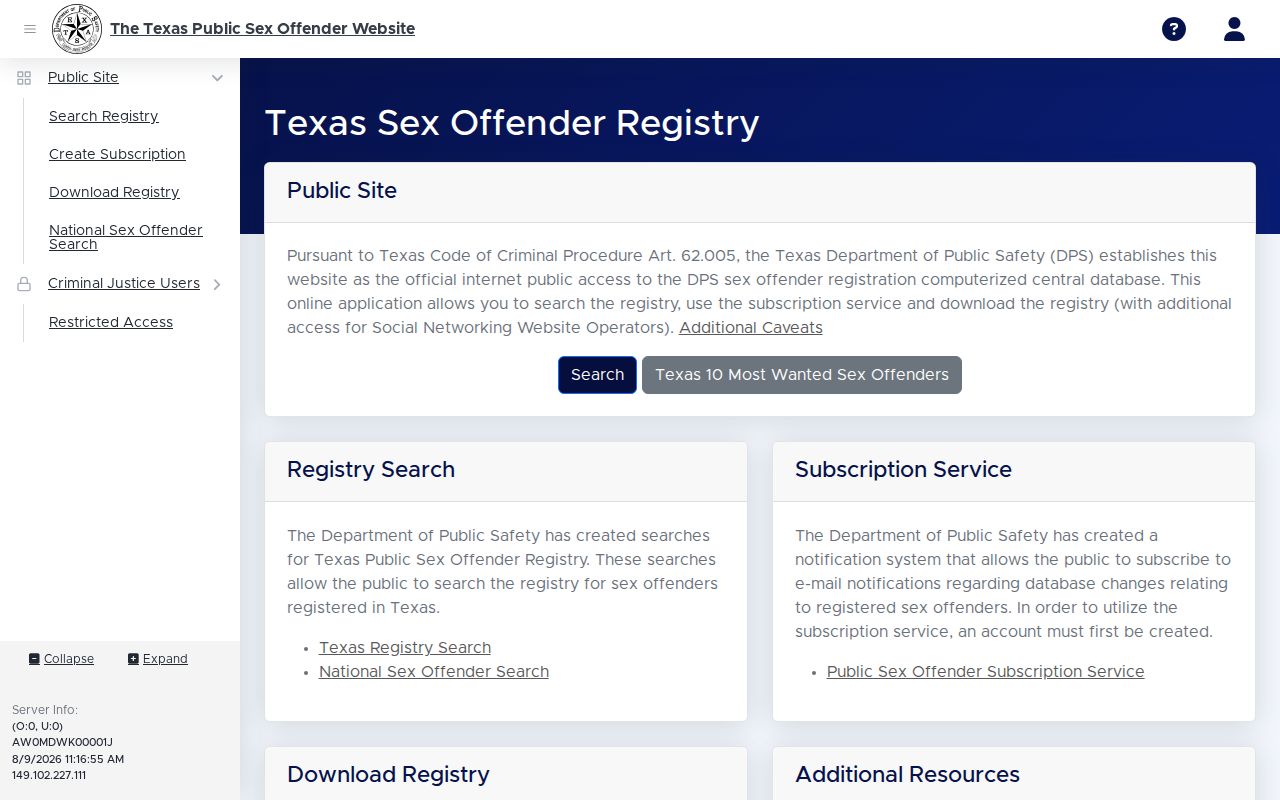
Its search controls are the best first stop, while the responsible local authority remains the place to report a possible registration problem.
Fannin Registry Address Authority
Registration responsibility turns on the address itself. For a residence within Bonham, Leonard, or Honey Grove, the city police department is the local registration authority. The Fannin County Sheriff serves an address outside a municipality and can be reached at 903-583-2143. The Sheriff is headquartered at 2375 Silo Road in Bonham. Texas law also directs the local authority to maintain the registration, send required school notices, and pass the report to DPS.
Fannin County Sheriff
2375 Silo Road
Bonham, TX 75418
903-583-2143
Inside city limits, use the Bonham Police records route, the Leonard Police Department, or Honey Grove City Hall at 903-378-3033. For an address near a boundary, give the exact street location rather than relying on its mailing city.
Note: No verified Fannin County sheriff app, local registry app, or local alert app was found, so use the portal and official notices.
Searching the Texas Public Sex Offender Registry
Texas DPS runs the registry and publishes the portion of each registration record that state law makes public. It offers several search modes instead of a single name box. County filtering works well for a broad Fannin County registry review. Address and map modes are more useful for a household, school route, or neighborhood. Use current radius choices shown by the live interface rather than relying on an old saved setting.
- Open the official DPS registry and review its conditions of use. Choose the search mode that fits the fact you know.
- Enter a name, select Fannin County, or use an address, city, ZIP code, or map search. Add only reliable details.
- Review possible results without treating a similar name as a confirmed match. Compare the photograph, age, description, and location.
- Open the full profile. Read the offense, registration status, risk level, local authority, and verification information, then note the date searched.
| Field Label | Type | Required | Notes |
|---|---|---|---|
| Search mode | Tabs or options | Yes | Name, address or location, map, and related public modes |
| Last, First, Middle Name | Text | Depends on mode | Middle name can help distinguish similar names |
| Address or Street | Text | Address mode | Used for a proximity search |
| City and County | Text or select | Depends on mode | Select Fannin for a county search |
| ZIP Code and Radius | Text and select | No | Use the choices currently shown by DPS |
| Current location map | Map control | No | Available where the current interface supports it |
The county filter can reveal profiles across municipal and unincorporated addresses, while an address or map search narrows the area of concern. Record the search mode and date so a later change can be compared fairly.
Fannin Registry Across State Lines
The U.S. Department of Justice National Sex Offender Public Website, or NSOPW, is the cross-state layer. It combines public information supplied by participating jurisdictions. This helps when a person recently moved, when the location sits near a state line, or when the searcher does not know which state holds the registration. It does not replace the contributing state record. Open the linked Texas profile for the detail and status Texas currently publishes.
The official NSOPW search illustrates the national route that complements a Fannin County sex offender check.
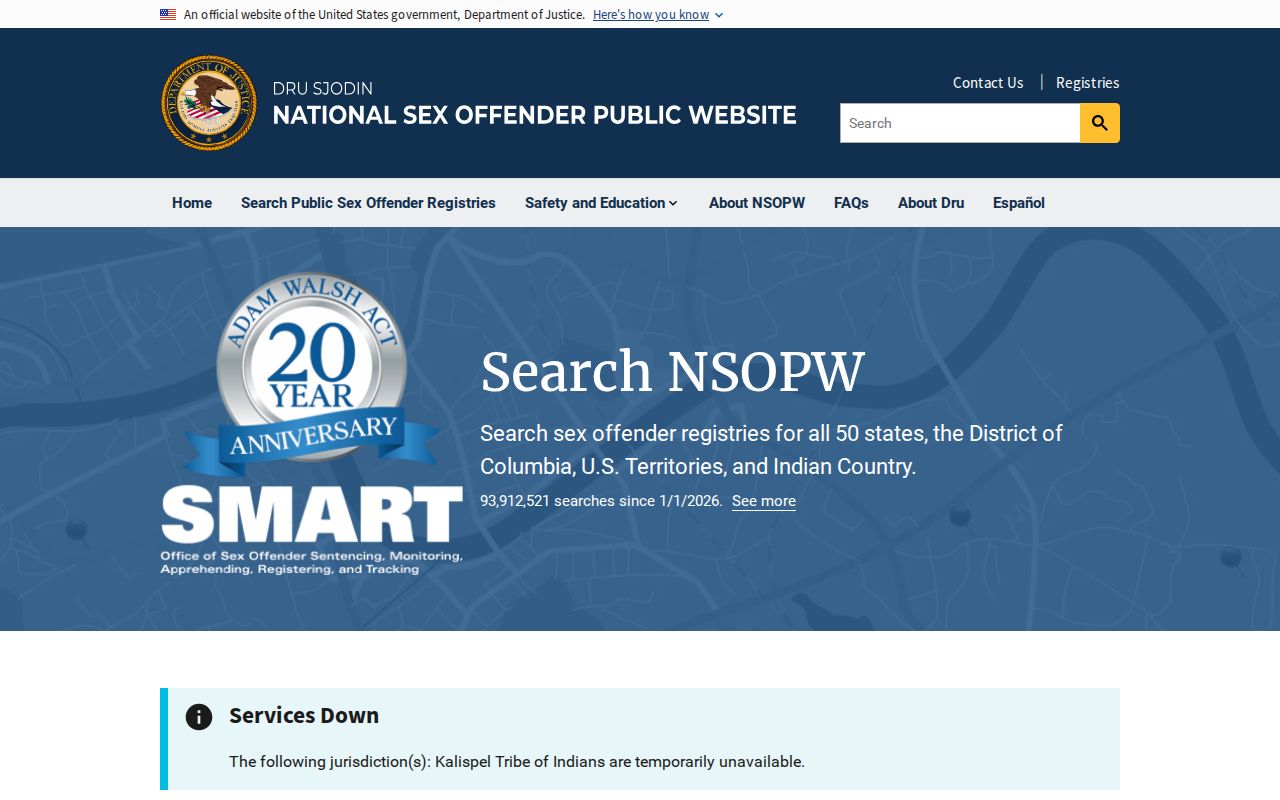
Use NSOPW to locate the reporting jurisdiction, then return to DPS or that jurisdiction for the fullest current public profile.
NSOPW offers broad scope, while Texas DPS provides state-specific detail. If the views differ, note each search date and ask the listed authority to verify the record.
What a Registry Profile Shows
A public Texas registry profile gives enough information to distinguish people and understand the registration. It does not expose every item the registrant provides. Read the record as a set: name and aliases, photograph, physical description, location, offense details, risk information, registration status, and the office receiving verification. Scars, marks, tattoos, and qualifying vehicle information may also appear. A single field can be stale or incomplete, so several matching points matter.
| Name & Aliases | Published identifying names used to match the correct profile. |
|---|---|
| Photo & Physical Description | Photograph, age or date of birth, sex, race, height, weight, hair, and eye color. |
| Registered Address | Address or location shown at the lawful public level, plus the reporting local authority. |
| Offense & Statute | Public offense description, statute, conviction or adjudication details, and victim-age category where releasable. |
| Risk Information | Low, moderate, or high assessment used in public notification, not a federal duration tier. |
| Registration Status | Status and verification information available in the current public record. |
| Other Identifiers | Scars, marks, tattoos, supervision details, and qualifying vehicle data when published. |
Registration Requirements and Levels in Texas
Texas does not use a simple public federal Tier I, II, and III duration chart. Chapter 62 generally assigns adult registration for life or through a controlling tenth anniversary, based on the reportable conviction and statutory rule. Risk levels of low, moderate, and high shape notification, but they do not by themselves set a ten-year, 25-year, or lifetime term. Verification is usually annual unless a heightened category applies.
| Texas Category | Duration | Verification Frequency |
|---|---|---|
| Risk level 1, low | Offense and statute control, often ten years or life | Generally annual unless another rule applies |
| Risk level 2, moderate | Offense and statute control, not a federal tier shortcut | Generally annual unless another rule applies |
| Risk level 3, high | Public statutory term applies | Generally annual, with broader notice tools |
| Two or more sexually violent offenses | Check lifetime categories in Article 62.101 | Every 90 days |
| Civilly committed sexually violent predator | Statutory lifetime framework | Every 30 days |
| Qualifying juvenile adjudication | Generally through the later tenth anniversary; court relief may apply | Statute and court order control |
A person generally registers with the proper local authority by the later of seven days after arrival or the first date local policy permits. The specific offense and Chapter 62 provision control the term, so confirm duration from the official record rather than assigning a federal tier.
Fannin Registry Address Timing
A registered address is not a live location marker. DPS states that a registrant generally reports an intended move in person no later than seven days before moving, then reports to the new Texas authority no later than seven days after arrival. Repeated presence at another place can also matter when the person visits at least three times in one month and remains there more than 48 hours in a row. Those rules explain why the registration office, residence, and current presence are not always the same thing.
If a Fannin County sex offender record seems inconsistent, save the profile URL and search date. Do not confront anyone. Call the authority tied to the location or the Sheriff for an unincorporated address. Suspected noncompliance can also be reported to the DPS Sex Offender Registration unit at 512-424-2800. Give facts that can be checked.
Texas Registry Notices in Fannin
The Texas Sex Offender Registration Program explains how local registration and state notification fit together. High-risk registrants and civilly committed sexually violent predators moving into a community can prompt DPS postcard notices in English and Spanish. Local authorities also notify schools when Chapter 62 requires it. Fannin County residents should not assume every registration creates the same notice. Risk, legal category, address, and statutory conditions affect the method.
The official DPS registration-program page provides the state framework behind Fannin County registry notices.
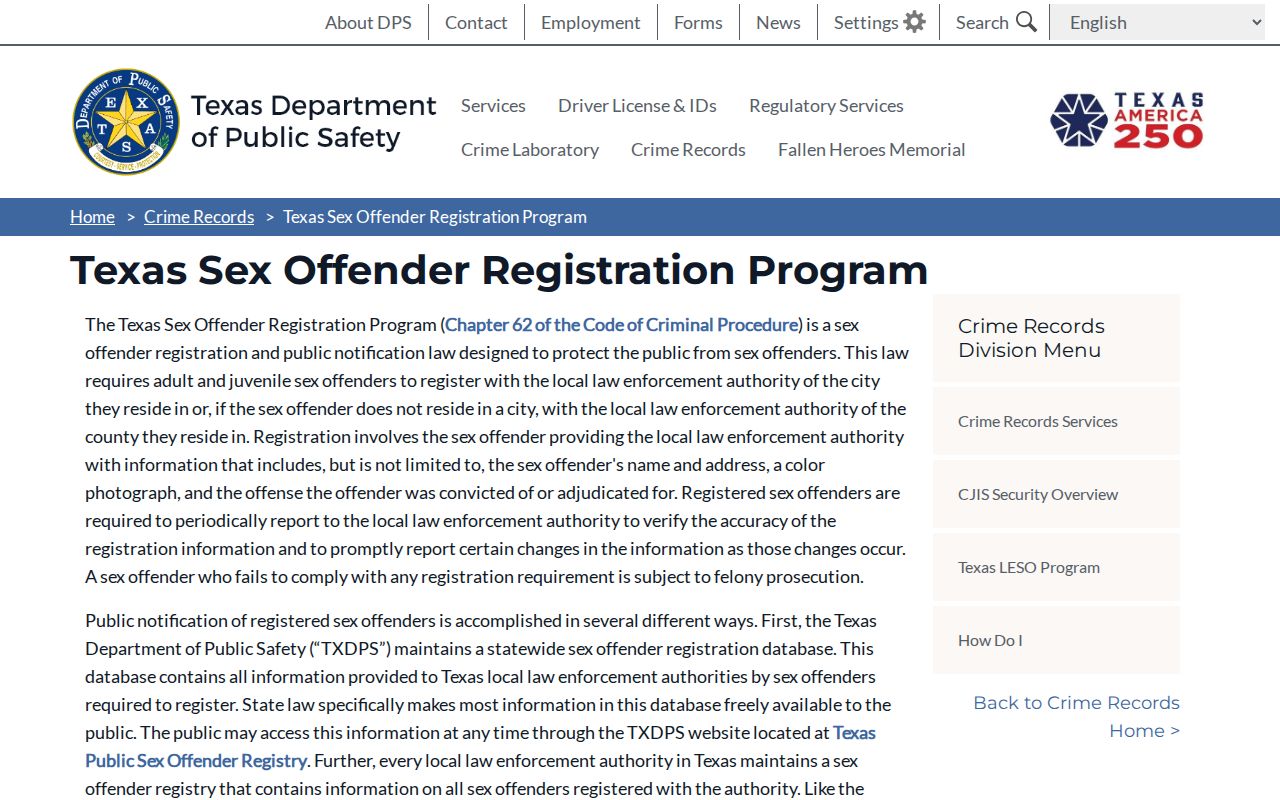
That program overview helps explain why a search result, a local verification visit, and a community notice serve different purposes.
Texas registration began September 1, 1991. Retroactive coverage can reach qualifying offenses dating to September 1, 1970 when the person was in the Texas criminal justice system for that offense on or after September 1, 1997. That history explains why an old offense can appear today.
Lawful Use and Community Notification
Registry information is published for safety planning and informed community awareness. It can help a family review a route, understand an official notice, or confirm which authority holds a registration. It does not authorize a private person to police, punish, shame, or confront anyone. Use the public record as it is presented, protect victim information, and send suspected violations to law enforcement.
Misuse Is a Crime: Texas DPS warns under the Chapter 62 registry framework that using registry information to harass, threaten, or intimidate a registrant or that person's family is prohibited and may result in criminal prosecution or civil liability. Do not use registry data for vigilantism, discrimination, or any unlawful purpose.
Community notices are one part of the system. The public registry remains the most consistent search route across Fannin County. If a notice and a profile appear to conflict, ask the listed police department, the Fannin County Sheriff, or DPS to verify the entry. Keep the inquiry factual. Never publish a private accusation or infer that someone who is not found has no registration duty elsewhere.